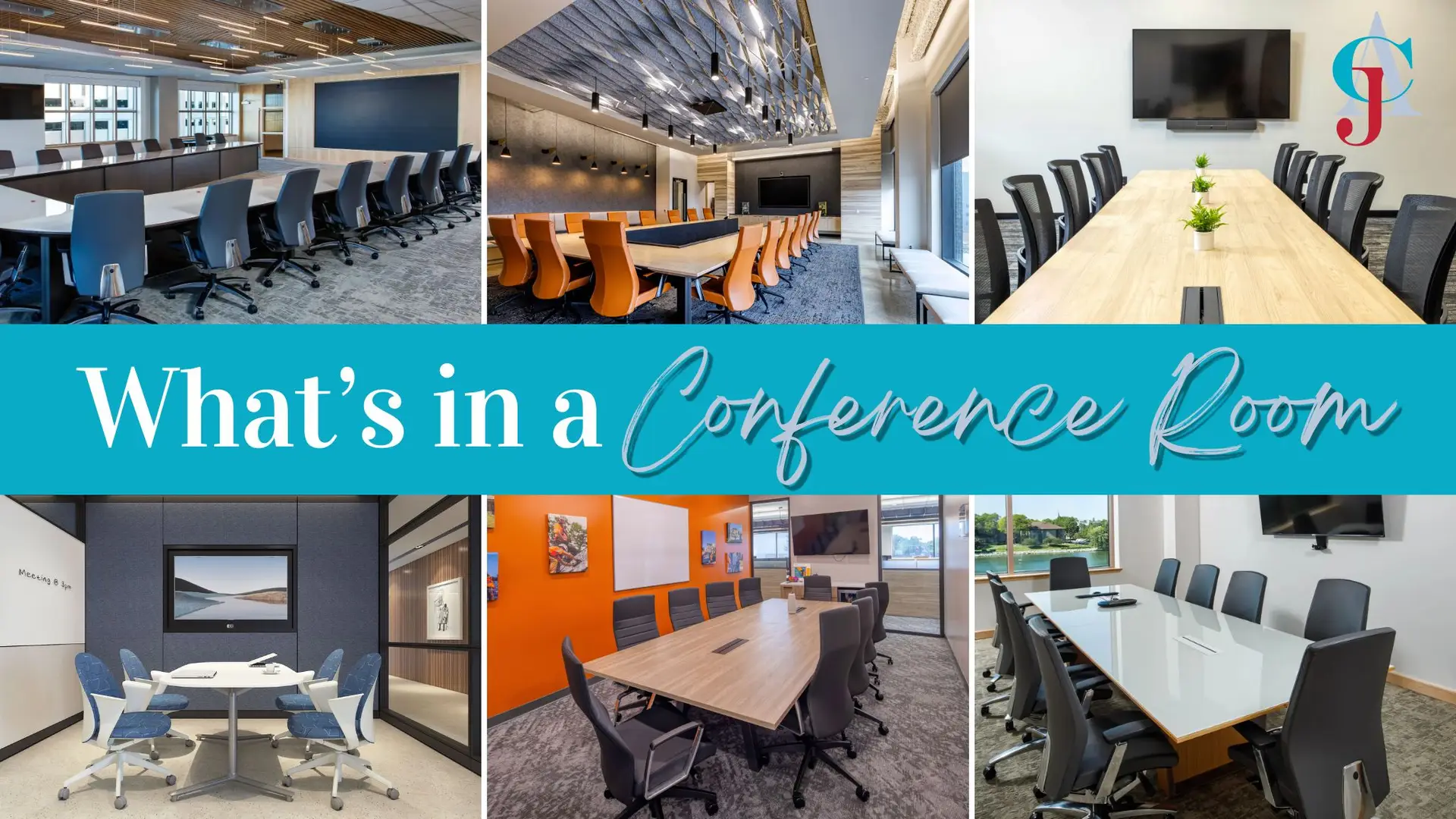
What’s in a Conference Room?
There’s one room in nearly every office, manufacturing facility, school, healthcare organization, nonprofit, or business that plays a bigger role than people often realize: the conference room.
It’s where you meet a new client for the first time. It’s the space where job interviews happen. It’s the room where leadership gathers to make important decisions. It’s where care teams, educators, business leaders, and employees come together to present ideas, solve problems, connect with people in-person and virtually, and sometimes have conversations that shape what happens next for the organization.
And yet, beyond the table, chairs, and TV screen, there is a lot more to consider when planning a new conference room or updating your current one.
How Will the Conference Room Be Used?
Before selecting a conference table or deciding where the screen should go, the most important question to ask is: How will your company use this conference room?
For some organizations, it may be where leadership meets every week. For others, it’s where clients are welcomed, teams collaborate, interviews take place, training happens, or employees connect with someone joining virtually from another location. Some organizations use their conference room as a breakroom for lunch, a quiet space for remote or hybrid employees to focus, or a place to meet with vendors. Often, it needs to do several of those things well.
Start by thinking about how many people typically use the room, how long meetings tend to last, whether people need to present or collaborate, how often someone joins virtually, and what technology needs to be within reach. Even details like whether people spread out drawings, review samples, brainstorm on a writable wall, or simply need a comfortable place for a longer conversation can change what the room should look like.
Your conference room isn’t designed around a table and chairs. It’s designed around what the people in the room need to accomplish.
When the Meeting Starts, Technology Should Too
We have all sat through a meeting that started fifteen minutes late while someone tries to figure out how to connect a laptop, find the correct cable, turn on a screen, or get someone on the other end of a virtual call to hear us. This is an uncomfortable scenario and doesn’t leave the best first impression, not to mention the level of anxiety it can create, especially for the person who is about to lead the meeting.
There are several things to consider when it comes to the technology you include in your conference room. Where will power be located? Can everyone at the table easily plug in? Are screens positioned where everyone can see them? Can someone walk into the room with a laptop and quickly connect? If part of your team works remotely, can they hear the people in the room, and can the people in the room hear them? On a virtual call, can all participants in the room be seen on the other end of the call?
Even the placement of furniture can affect how well technology works. Camera angles, sight lines, lighting, microphones, speakers, and access to power should all be part of the conversation when the room is being planned.
When technology is well planned, it becomes one less thing anyone has to think about and allows the meeting to start the way it should.
A Great Conference Room Needs to Sound Good
You can have beautiful furniture and the latest technology, but if no one can clearly hear the conversation, the conference room isn’t going to work.
Conference rooms can create some unique acoustic challenges. Hard flooring, glass walls, large tables, high ceilings, and other finishes can create an echo and make conversations difficult to hear. Privacy is also an important consideration. A confidential client conversation, employee interview, or leadership meeting shouldn’t necessarily be heard by everyone sitting outside the room.
There are many ways to address acoustics through the design of a space, including ceiling products, wall materials, flooring, window treatments, acoustic panels, furniture, and other elements. The right solution will look different from one conference room to another, which is why acoustics should be considered during the planning stages of your conference room design rather than addressed after the room is finished.
With so many acoustic solutions available, it is important to choose the ones that address the specific issues within your individual space.
The Right Chairs Matter More Than You Think
There are thousands and thousands of conference room chairs to choose from, and often chairs are selected based on their look and price. However, most of the time someone spends in a conference room will be spent sitting in one of those chairs, which means seating should be selected much more strategically.
A ten-minute check-in can turn into a two-hour strategy meeting, an interview can run long, and a training session can last much of the afternoon. That means people may spend a considerable amount of time in these chairs. If the chairs are uncomfortable twenty minutes into a meeting, people will most certainly notice.
Things to consider when selecting seating for your conference room or boardroom include how the chair works with the size and height of the table, whether it leaves enough room for people to move comfortably around the room or cross and uncross their legs without feeling cramped, and whether you can accommodate the number of seats you need without making the room feel crowded.
Comfort is also a key detail to consider. Is the width of the seat comfortable for people of different sizes? Is the chair ergonomically designed? Selecting the right seating can quickly become overwhelming, especially when a chair may look great in a photograph but feel completely different once you spend an hour sitting in it.
This is why it is important to work with a commercial interiors and office furniture partner who understands the many different seating options available and can help you determine what will work best for your space. CJ & Associates serves the Milwaukee, Madison, and Fox Valley areas and has an in-house showroom where you can try different types of seating for yourself and get recommendations from a team that works with these products every day.
What Else Does the Conference Room Need?
The table may be the largest piece of furniture in the room, but it shouldn’t be the only thing you think about.
Does the room need storage? Is there a credenza for technology, supplies, refreshments, or presentation materials? Is there somewhere to set a coat or bag? Do you need a whiteboard or writable surface? Will people need space to spread out plans, samples, or materials? What happens when someone enters the room after everyone else is already seated? Is there enough clearance to move comfortably?
Lighting also plays a bigger role than people realize. A room that looks great during the day can feel completely different during an early morning or evening meeting. Lighting should support the different ways the room is used, including virtual meetings and presentations where screen visibility is critical. It should also be comfortable for the people sitting in the room, without glare from windows, screens, or overhead fixtures becoming a distraction.
These may seem like small details individually, but together they can completely change how the room functions and how comfortable it is to use.
Your Conference Room Says Something About Your Company
Along with your reception or welcome area, a conference room may be one of the spaces visitors see most often. That gives you an opportunity to make the room feel like an extension of your company’s brand story.
That doesn’t necessarily mean putting a giant logo on the wall. Your brand can come through in color, materials, artwork, graphics, finishes, furniture, lighting, and the overall feel of the room. A manufacturing company may want its conference room to reflect the materials or products it creates. A healthcare organization may want the space to feel comfortable and welcoming. A professional services firm may want something more refined and formal.
At CJ & Associates, we created a historic timeline across an entire conference room wall that tells the story of our company and how we’ve grown over the past 40+ years. It gives visitors something to experience while they’re in the room and helps them learn a little more about who we are, where we came from, and how CJ has evolved.
The goal isn’t to decorate the room around your logo. It’s to make sure the space feels like it belongs to your organization and helps tell the story of who you are and what you do.
Getting the Conference Room Right
A conference room may be only one room within your building, but it is important to think about everything you need it to do well.
It needs to welcome clients, support your employees, accommodate technology, provide privacy, keep people comfortable, represent your brand, and work for meetings that can range from a quick conversation between two people to an important presentation with a room full of decision makers. That’s a lot to ask from one space, which is exactly why getting the conference room right is worth the time and effort.
At CJ & Associates, our design team understands the strategy behind your workplace, and considering details like these is part of our design process from the beginning. It’s our goal to create a space that works for what you need today, while giving you the flexibility to adapt as those needs change in the future.
If your conference or boardroom isn’t working as it should, or you are considering a workspace renovation, start by talking with our design team. We’ve been in this business for more than four decades and take great pride in creating spaces that look great, work well, and make sense for the people using them every day.
Is Your Conference Room Working As Well As It Could?
If this article has you thinking about your own space, our design team put together a Conference Room Function + Design Checklist to help you take a closer look. Click here to access the Conference Room Checklist.