The Missing Link Between Workplace Design and Employee Well-being
For years, workplace design was measured by how a space looked and how efficiently it functioned. Open offices, private offices, and collaborative areas, all carefully planned to support workflow and productivity.
While this is still important, it is no longer enough.
Companies today are seeing firsthand that even the most beautiful, well-designed spaces can fall short if they are not supporting the people inside them. The conversation is changing from how a space should function to how a space should feel.
At CJ & Associates, that shift has become part of how we think, how we design, and how we partner with our clients.
A workplace is not just a physical environment. It is where people spend the majority of their day. It influences how they think, how they interact, how they handle stress, and ultimately how they perform.
That is why we have taken a step that very few in our industry have taken by bringing a licensed clinical social worker into the commercial design conversation.
Workplace Design Is Evolving Beyond Function
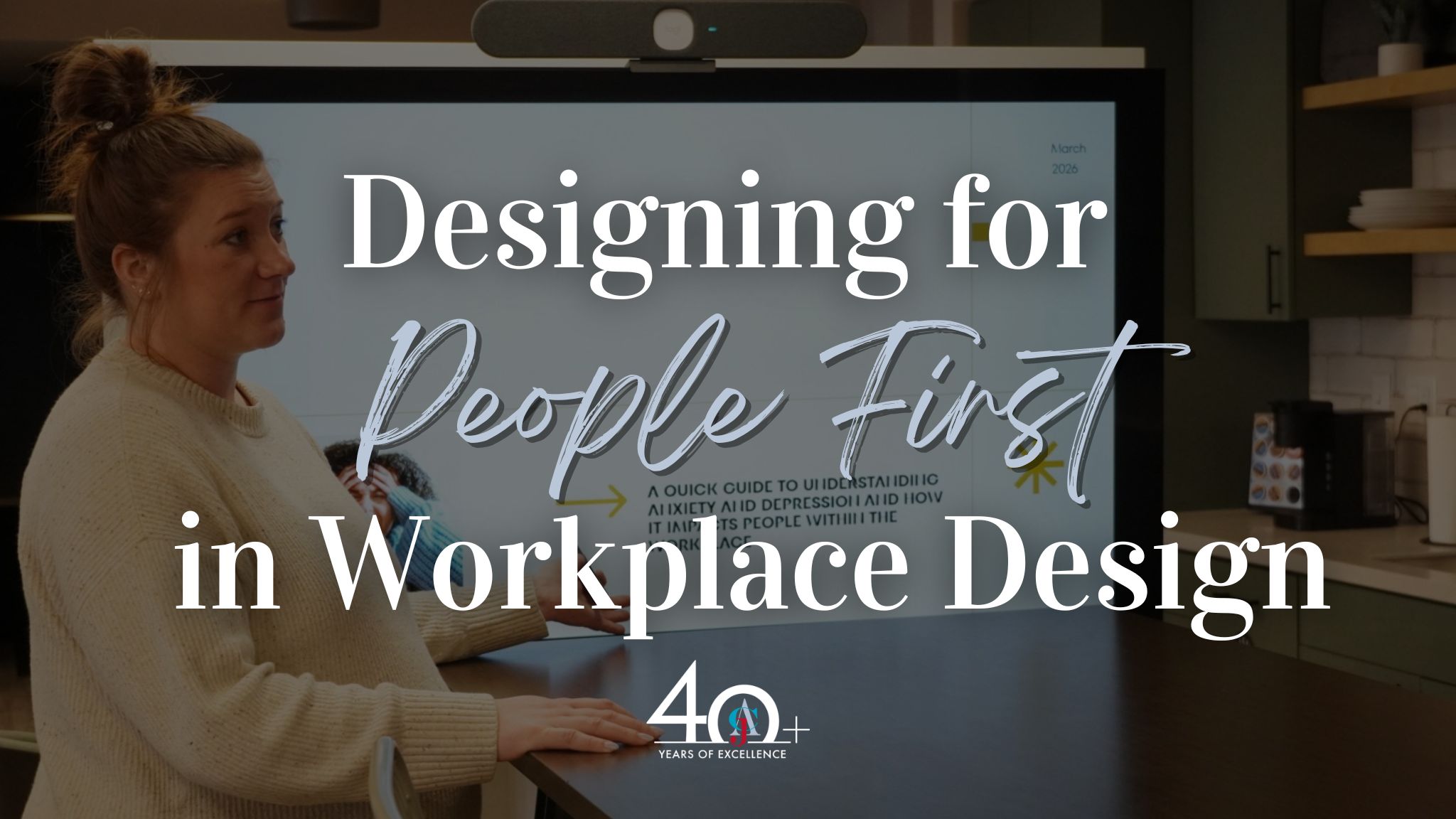
Sam Sprung, LCSW, joined CJ & Associates with more than a decade of experience working directly in the behavioral health field. Her background spans healthcare, schools, and private practice, where she has supported individuals through change, stress, and personal growth.
Today, her role bridges two important areas. She supports the internal wellness of our own team, while also helping shape how workplace environments can better support the people who use them every day.
She is also continuously educating our team on how the human brain works and what people need to feel supported, helping them understand the “why” behind healthy design decisions and how to carry that into every project.
This shifts how design decisions are made from the very beginning.
Instead of only focusing on layout, finishes, and furniture, we begin to ask deeper questions. Are employees getting enough natural light throughout the day? Do they feel safe and comfortable in their environment, not just physically but psychologically? Are there opportunities to connect with others without feeling overstimulated or completely isolated? Is there space to move, reset, and step away when needed? Can elements of nature be introduced to create a sense of calm?
You won’t see these details on a floor plan, but they have a direct impact on how people experience their workplace every day.
How Has the Workplace Changed Since COVID?
Since the COVID pandemic, there has been a significant increase in anxiety and depression tied to workplace transitions. Employees who once worked from home are now navigating a return to the office with new expectations, routines, and stressors.
At the same time, organizations are facing one of the most expensive challenges in business today: employee turnover. When people do not feel supported, they leave. And the cost of replacing them goes far beyond recruiting and onboarding. It impacts team dynamics, productivity, and long-term growth for the organization.
What we are seeing across all industries is clear. When employees feel comfortable and supported within their environment, they are more productive and more likely to stay.
Why Workplace Environment Directly Impacts Performance
There is a direct connection between the environment and performance. Every person operates within a hierarchy of needs, and when those needs are met, whether it is comfort or safety, people are able to think more creatively, collaborate more effectively, and contribute at a higher level. When those needs are not met, even the most capable employees can struggle to perform at their best.
This is where workplace design becomes something much more than a visual exercise. It becomes a strategic investment in people, and at CJ & Associates, we approach every project with that understanding from the very beginning.
Our process starts in discovery, where we take the time to understand how a team works, where friction exists, and what challenges employees are experiencing in their current space. From there, our design team builds solutions that support both the functional needs of the business and the human needs of the people inside it.
Beyond Design: Supporting Workplace Wellness
This mindset carries through to the furniture and products we specify as well. We partner with manufacturers who prioritize ergonomics, movement, and comfort, ensuring the physical elements within a space are working just as hard as the layout itself.
What makes this approach different is that it does not stop at design. Through Sam’s role, we are able to support our clients beyond the physical environment. She works alongside organizations to educate both leadership and teams, helping them better understand how workplace wellness impacts their day-to-day experience, from stress management to overall well-being.
Creating a space that supports a team is a strong start, but helping organizations understand how to support their people within that space is just as important.
A Different Kind of Workplace Design Partner
For more than 40 years, CJ & Associates has built its reputation on listening, understanding, and creating spaces that evolve with the businesses we serve year after year. This approach is a natural extension of that philosophy.
It is a direct response to what workplaces need to be today. Not just efficient. Not just beautiful. But supportive, adaptable, and human.
At the end of the day, the most successful spaces are not defined by the furniture inside them or the textures and finishes on the walls. They are defined by the experience they create. A workplace where people genuinely enjoy being and are able to do their best work.
Workplace design has a direct impact on employee well-being, productivity, and retention, making it one of the most important investments a company can make. Connect with Sam Sprung on LinkedIn or reach out to our team to start a conversation around workplace wellness design and employee training.
Workplace Design Questions We Hear Most Often
How does workplace design impact employee well-being?
Workplace design affects how employees feel, focus, and function throughout the day. Factors like lighting, layout, comfort, and access to movement all contribute to reduced stress, improved mental health, and overall well-being.
Why is workplace design important for employee productivity?
When employees feel physically and mentally supported in their environment, they are able to work more efficiently and perform at a higher level.
What is workplace wellness design?
Workplace wellness design focuses on creating environments that support employee health, comfort, and performance. This includes elements like natural light, ergonomic furniture, flexible spaces, and thoughtful layout decisions.
How can office design improve employee retention?
Employees are more likely to stay with organizations where they feel supported. A workplace that prioritizes comfort, flexibility, and overall experience can reduce turnover.
What makes CJ & Associates different in workplace design?
CJ & Associates takes a people-first approach to workplace design, including the integration of a licensed clinical social worker to help connect employee well-being with space planning and workplace strategy.