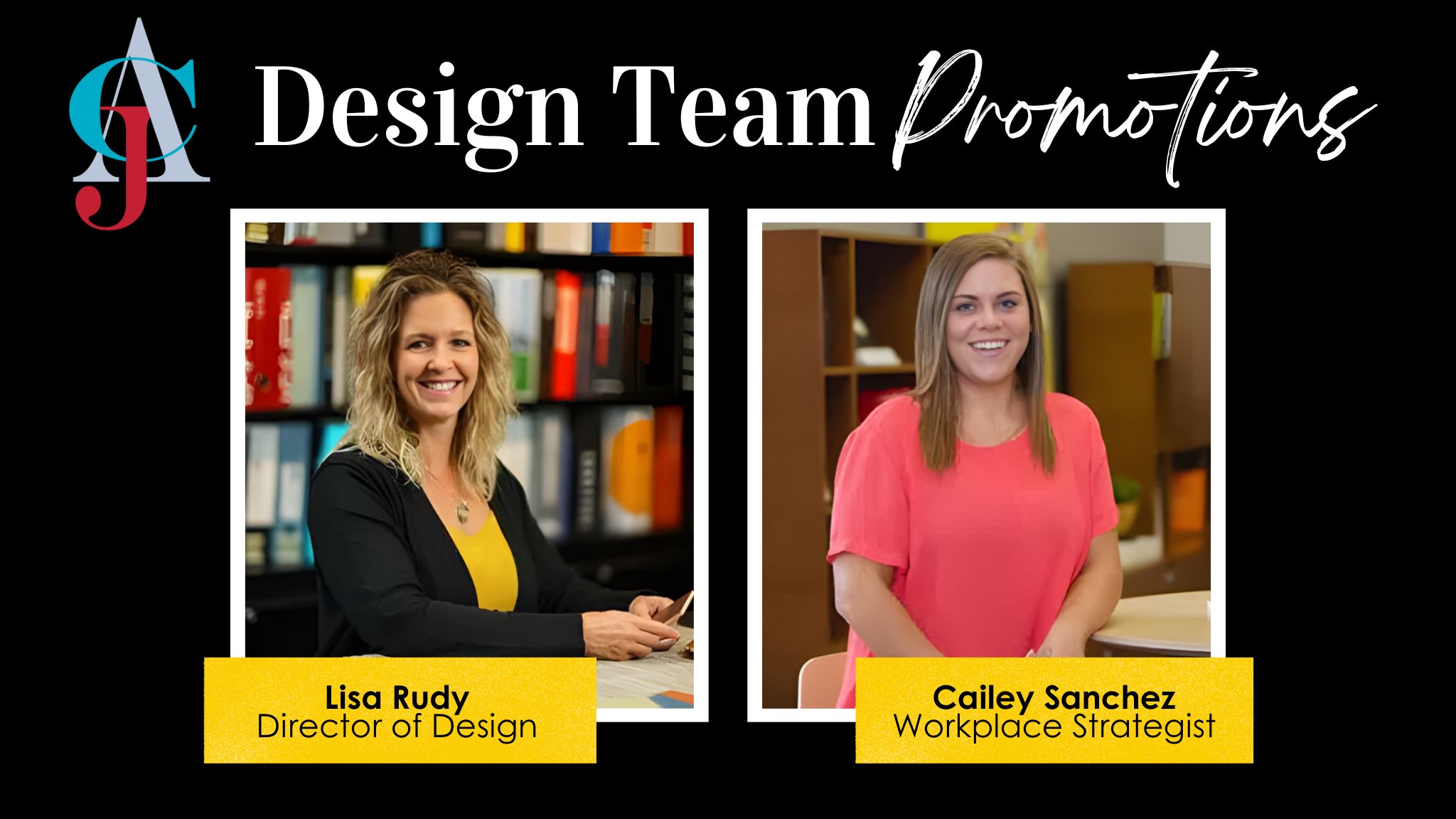
Commercial interior design and furniture selections do not stand still. They evolve with how people work, how companies grow, and how the culture shifts inside the office. As Workplace Strategist at CJ & Associates, Cailey Sanchez studies how work is changing across corporate, healthcare, education, and manufacturing environments, translating those insights into spaces built for today and adaptable for tomorrow. We asked her to share what she sees taking shape in 2026.
Several themes clearly define the direction of commercial interiors. Texture is replacing flat surfaces. Curves are softening corporate edges. Color is becoming more grounded. And community is driving spatial layout decisions more than ever before.
Here is what is shaping commercial interiors in the year ahead.
Tambour Is Defining Architectural Texture
If there is one material detail that defines 2026, it is tambour.
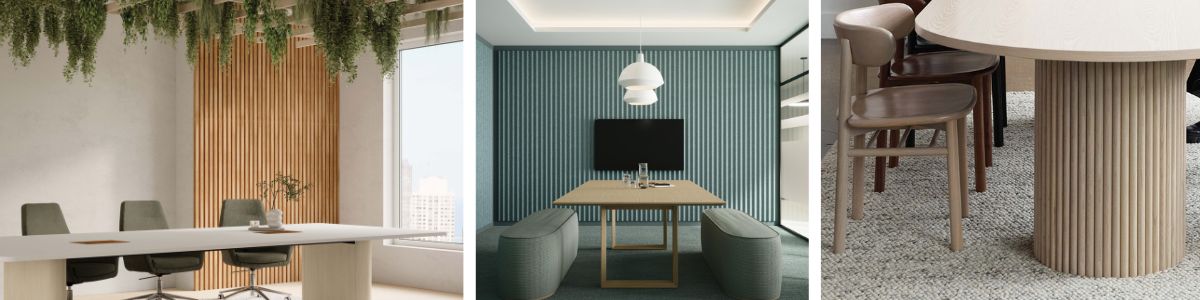
Tambour is a fluted wood application that introduces vertical rhythm and depth into a space. We are seeing it applied to feature walls, wrapped around reception desks, integrated into ceilings, and detailed along the base of conference tables. It transforms what would otherwise be a flat surface into something intentional and dimensional.
The most requested finish right now is a light pecan tone in rift cut white oak. It delivers warmth without feeling heavy and texture without overwhelming the room. In healthcare environments, it softens clinical edges. In corporate offices, it adds a layer of sophistication. In education spaces, it introduces character without sacrificing durability.
Softer Curves Built Into the Space
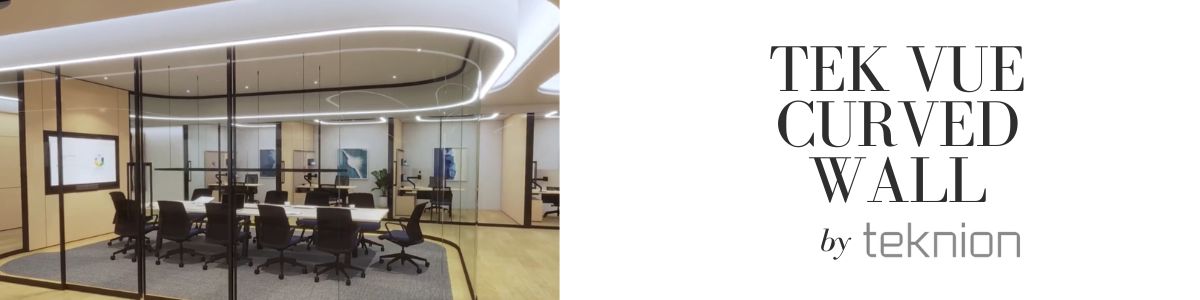
One of the most noticeable shifts heading into 2026 is the move toward softer curves, especially within the architecture itself. This is no longer just about rounded lounge seating or an oval conference table. Curves are being integrated directly into glass interior walls, openings, and ceiling details.
Instead of sharp ninety-degree corners, interior glass partitions are being designed with radius edges that create a more natural transition from one space to the next. Arched openings are quietly reappearing in corporate environments. Even ceiling treatments are stepping away from rigid linear grids and introducing subtle movement through curved forms.
For years, commercial interiors leaned heavily into straight lines and hard edges, which often lacked warmth. Softer architectural curves maintain structure and professionalism, but they introduce a level of approachability that today’s workplaces need. They soften the experience of the space in a way that feels less corporate and more comfortable. In many cases, it simply feels more like home.
Curved glass walls still provide transparency and natural light, but they introduce visual interest in a way that feels intentional, not decorative. Circulation feels more natural as the eye moves differently through the space. It is a subtle architectural shift that changes how a workplace feels and functions.
Color is Getting Warmer
We are seeing a strong use of earth tones across commercial interiors right now, especially in textiles. Fabrics are getting richer. There is more depth in the materials being selected, particularly in lounge seating and collaborative areas.
This year’s Pantone Color of the Year, Cloud Dancer, a soft white, reinforces the direction toward lighter foundations and layered neutrals. What is coming next is worth watching.
Cailey shares, “I believe we are going to start seeing pastels make their way back into commercial interiors. Not in an overpowering way, but thoughtfully layered into collaborative spaces and employee-focused areas. It adds a lighter energy without compromising professionalism.”
Color in 2026 is less about making a bold statement and more about creating balance. For additional 2026 color trends, click here.
Designing for Community
The biggest shift we are seeing is not about finishes; it is about how space is being used.
The hybrid wave forced companies to rethink the office, and the conversation has matured. It is no longer about how many people are coming in, but why they are coming in and how to create a space they want to keep coming back to.
Organizations want their spaces to create a connection. They want environments that support collaboration without forcing it. We are designing more central gathering areas and café style zones that are natural hubs where people cross paths throughout the day and have the ability to pause and connect.
There is also a stronger focus on flexibility. Meeting rooms that can shift in size. Open areas that support both heads-down work and quick collaboration. These are spaces that can evolve as teams grow or restructure.
At CJ & Associates, this mindset is built into every project. We ask how your team works today, what is not working, and where you see your company in the next three to five years. Future-proofing is not a trend. It is part of a responsible workplace strategy.
In 2026, space is strategic, intentionally planned to shape culture, support growth, and create an environment people want to be part of.
Biophilic Design and Healthier Workplaces
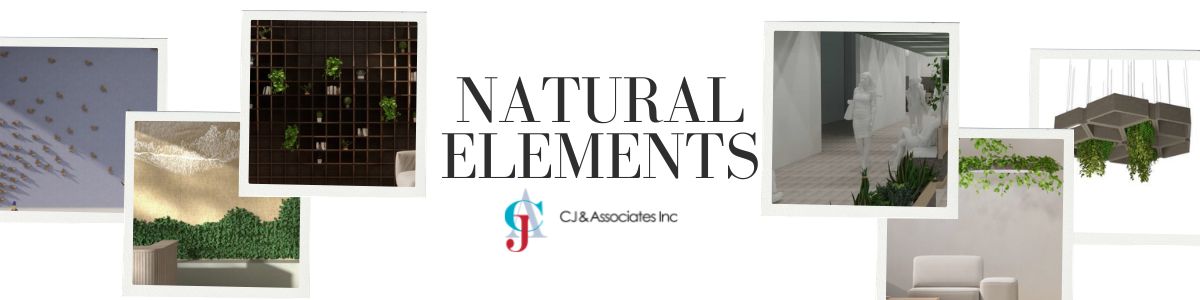
Biophilic design continues to evolve in 2026, but the conversation is broader than greenery alone. Natural elements are being integrated more thoughtfully into commercial interiors, from moss walls featuring branded logos to layered wood tones and layouts that maximize access to daylight. These decisions are directly connected to wellness in the workplace.
Organizations are paying closer attention to how their environment affects the people who use it every day. Lighting influences energy and focus. Acoustics shape productivity. Material selections impact indoor air quality and long-term comfort. The design of a space can either support well-being or quietly work against it.
At CJ & Associates, these considerations are not secondary. A designated member of our team participates in design discussions specifically through the lens of workplace wellness, ensuring each project is evaluated not only for function and appearance, but for how it supports the health and performance of the people inside it. From early planning through final finish selections, wellness is integrated into the design strategy. In 2026, creating a healthy workplace is not an added feature. It is part of responsible design.
What Is Evolving in 2026
As workplace design continues to evolve, some solutions are simply being applied differently than they were a few years ago.
During the rapid shift to hybrid work, enclosed pods and private focus rooms, often referred to as phone booths, became an immediate and effective response. They delivered flexibility and acoustic control when companies needed quick solutions. That need has not disappeared, but privacy is now being considered earlier in the planning process.
Instead of adding standalone elements after the layout is established, focus areas and acoustic strategies are built directly into the architectural plan. Products like the Pods from Teknion continue to play an important role, but they are part of a larger strategy rather than the primary solution.
The shift is not away from privacy. It is toward more intentional integration.
Looking Ahead
Design trends will continue to shift, but the underlying goal remains the same: create workplaces that support the people inside them.
In 2026, we are seeing more intention in every layer of commercial interior design. Architectural texture that adds depth. Softer lines that feel more inviting. Color that brings warmth. Spaces planned around connection and long-term flexibility. Wellness is built into the conversations from the start.
At CJ & Associates, these are not passing ideas. They are part of how we think. Every project begins with listening, understanding how your team works, and designing an environment that supports your business both now and in the years ahead. We stay closely connected to the industry through ongoing manufacturer partnerships, frequent product updates, and continuing education, ensuring that the insight behind every design decision is intentional.
Good design is not about chasing what is next. It is about building environments that stand the test of time and support your people and your growth.